
by Valerie Harkins Lindsey, Executive Director, Maternity Housing Coalition
Every maternity home eventually runs into a problem that refuses to stay tidy and behave itself. Synthetic marijuana is one of those problems. It’s marijuana, one of the oldest drugs - but is it really?
It is tempting to treat it like ordinary marijuana, or fold it into an alcohol policy and call it a day. That would be convenient. It might also be insufficient.
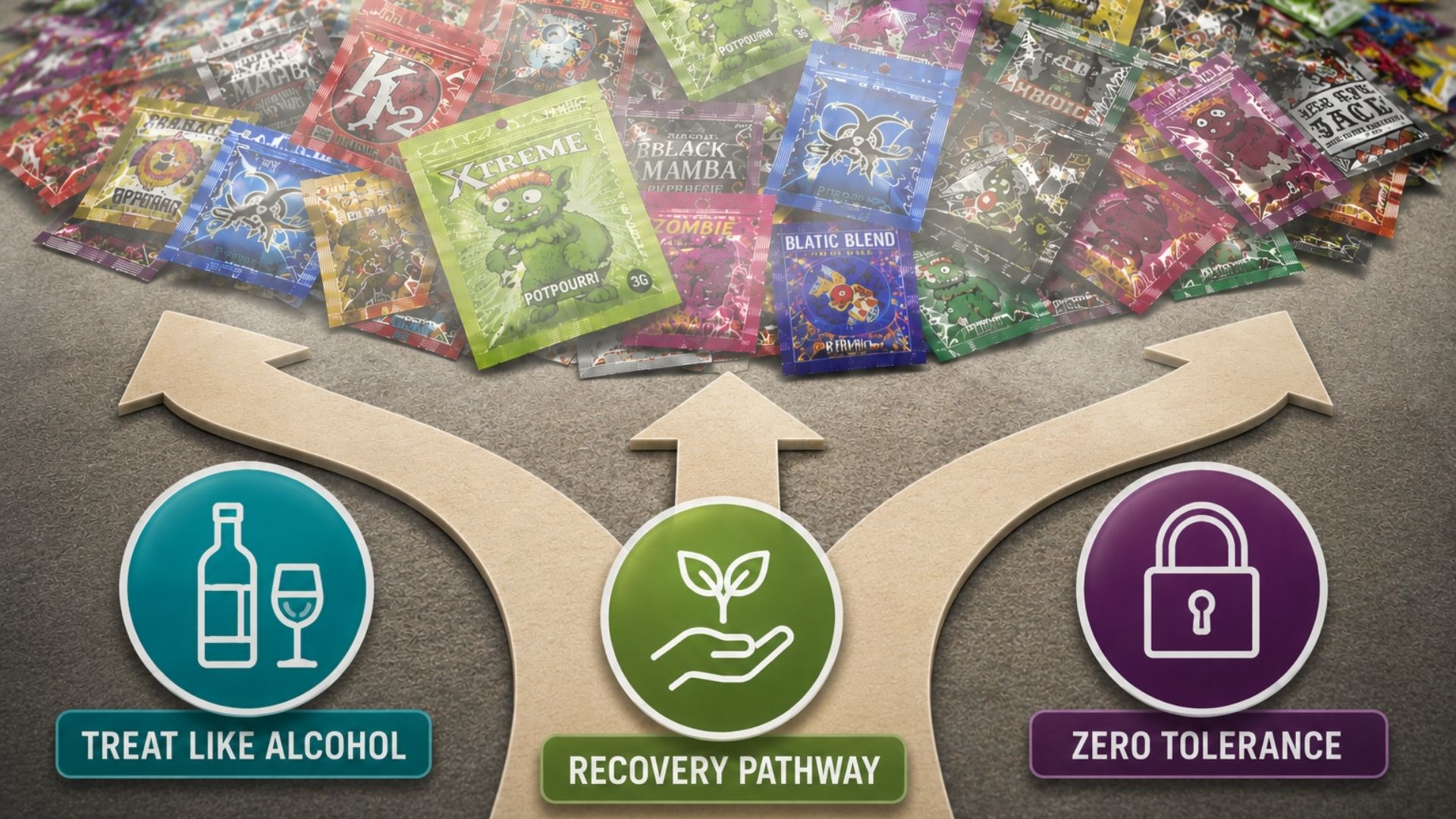 Synthetic cannabinoids, often sold as K2 or Spice, are lab-made chemicals designed to act on the same brain receptors as THC. NIDA states that K2 and Spice can produce stronger effects than marijuana, and an NIH-hosted peer-reviewed article explains that many synthetic cannabinoids are more potent than THC because they activate cannabinoid receptors more fully and intensely. In plain English, this is not just marijuana with a different label. It is engineered to hit harder, and often does.
Why does that matter in maternity housing? Because the fallout is not just behavioral. It can be psychiatric. The CDC warns that synthetic cannabinoids can cause confusion, hallucinations, delusions, psychosis, suicidal thoughts, violent behavior, and problems with concentration. The CDC also notes that these products are unpredictable, with no consistent manufacturing standards, which means two similar-looking packages may contain very different chemicals or doses.
That is why many leaders are rethinking whether and how synthetic marijuana belongs under a standard substance policy at all.
Here are the basic policy approaches I see programs weighing:
- Treat it like alcohol
Residents over 21 may use off-campus, but may not return home under the influence. This is an acknowledgement of the resident’s legal age for consumption and the inability of residential staff to control resident behavior when away from the home. This is simple, familiar, and easy to explain. The weakness is that synthetic cannabinoids are far less predictable than alcohol, and the psychiatric risks can escalate quickly. - Ban alcohol and marijuana entirely
Some programs take the clearest route possible. No alcohol. No marijuana. No synthetic marijuana. This is often easier to enforce and may fit best in homes where stability and safety are already fragile. However, a note of consideration here is that if using this approach, you may deem a large portion of applicants as ineligible for help through your ministry. - Give synthetic marijuana its own category
This may be the most realistic option. It allows a program to keep its existing alcohol or marijuana policy while acknowledging that synthetic cannabinoids carry a different level of risk, especially where psychiatric health is concerned. Homes may accept a resident with pre-existing cannabinoid use but require recovery program participation including daily/weekly 12-step work, individual counseling, and outpatient recovery services. Randomized drug testing is recommended with this approach.
There is also the addiction issue, and it should not be minimized. NIDA says anyone can become addicted to synthetic drugs, and the CDC reports that synthetic cannabinoids can lead to physical and psychological dependence. People who stop after heavy use have reported severe anxiety, trouble sleeping, nausea, vomiting, sweating, rapid heart rate, chest pain, difficulty breathing, and even seizures. So if a resident has been using synthetic marijuana, consequences alone are rarely enough. Recovery work matters.
A practical response usually includes:
- Clear staff language
Define what staff should watch for, such as confusion, paranoia, hallucinations, suicidal talk, agitation, or severe vomiting. - A safety-first response
If a resident appears medically or psychiatrically unstable, the first question is not what consequence to assign. The first question is whether she needs urgent medical evaluation. - A recovery path after the incident
Consider assessment, counseling, treatment referral, relapse planning, and closer support. If addiction is part of the picture, presuming it is merely a discipline problem will not help the resident.
I would also encourage homes to think carefully before defaulting to exclusion whenever cannabinoid addiction enters the picture. Many programs assume they are not equipped to serve these residents, when in reality the core needs are often more practical than specialized. What many women need most is a house that notices what is happening, provides real structure, sets clear expectations, and connects them every day to people who are qualified to help, especially recovery programs and other clinical supports in the community. Not every home is called to every level of care, but many are more capable than they think if they approach the issue with awareness, consistency, and a willingness to build the right outside partnerships.
This is one of those moments when policy needs to be smarter than the street name. Synthetic marijuana may sound familiar, but its effects can be anything but. The goal is not to overreact. The goal is to see clearly, respond calmly, and write policy that deals with the real problem instead of the convenient one.
This article is for informational and training purposes only and is not medical advice.
Sources
- National Institute on Drug Abuse, Mind Matters: The Body’s Response to K2/Spice and Bath Salts
https://nida.nih.gov/research-topics/parents-educators/mind-matter-series/k2-bath-salts - PubMed Central, Synthetic Pot: Not Your Grandfather’s Marijuana
https://pmc.ncbi.nlm.nih.gov/articles/PMC5329767/ - Centers for Disease Control and Prevention, About Synthetic Cannabinoids
https://archive.cdc.gov/www_cdc_gov/nceh/hsb/envepi/outbreaks/sc/About.html - Centers for Disease Control and Prevention, Synthetic Cannabinoids: An Overview for Healthcare Providers
https://archive.cdc.gov/www_cdc_gov/nceh/hsb/envepi/outbreaks/sc/healthcare.html
SAMHSA National Helpline
https://www.samhsa.gov/find-help/helplines/national-helpline
