
by Brooke Myrick BSN, RN, LAS & Kelly McCallister BSN, RN, LAS
This is the final article in a series of three bringing an emphasis of fertility awareness to equip and empower those in pregnancy help and ensure women understand their bodies to make informed choices in their healthcare.
Do our Pregnancy Help Medical Clinic (PHMC) clients track their cycles - completely?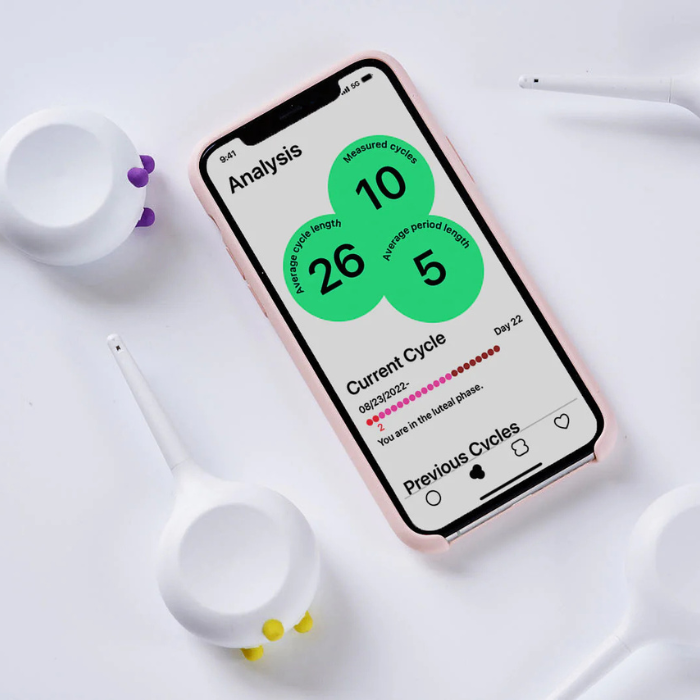
Most women today use an app on their phone to track their cycles, but are they able to ascertain the information necessary to understand how their bodies are functioning? A tracking app reflects data based on what is entered. If we are not able to provide the app with accurate observations, then the information it provides to us will be flawed. Most often, we only enter when our period starts and ends, but there is so much more our cycles encompass. Another consideration is that most tracking apps use algorithms based on a 28-day cycle to provide an estimation of ovulation. It is estimated that about 16% of women have a 28-day cycle and only about 13% ovulate on day 14, which is contrary to what has traditionally been taught. Where does that leave our Pregnancy Help clients?
Giving our clients the understanding and ability to learn the signs of her own fertility could be incredibly beneficial. Being attuned to identifying patterns is key to knowing what our body is communicating. Biomarkers are one such way that we can measure expected biological processes while also raising awareness when something might be amiss. Common fertility biomarkers include cervical mucus, basal body temperature, and hormone levels in urine and plasma. Of this list, cervical mucus is the most readily available to every woman.
What education can we provide our PHMC clients about their cycles?
During a cycle, a woman has a fertile window estimated to last about 6 days. Of course, this can vary from woman to woman and even cycle to cycle. Learning how to observe her biomarkers and what they mean can empower her to better identify her fertile period during her cycle. Whether her goal is to achieve or avoid pregnancy, this can prove useful over the entirety of her fertile years. According to an observational study published by the American Society for Reproductive Medicine, “when perceived accurately, more accurate clinical self-detection of the fertile window can be obtained by identification of peak mucus.” Does your client know the difference between fertile mucus and infertile mucus?
Fertile mucus is more estrogenic and conducive to providing an environment that supports sperm in reaching the egg upon ovulation. It is clear, lubricative in nature, and stretchy in consistency. The fertile mucus becomes increasingly copious towards ovulation. Infertile mucus is more progestogenic and creates a barrier for the cervix, making it unfavorable for sperm passage, and also provides protection from bacteria entering the cervix. It is opaque, dry, thick, and most often only observed in scant amounts. After ovulation has occurred, the corpus luteum produces progesterone, which helps support and protect a possible pregnancy. Progestogenic mucus may be observed during this time in the cycle. Progestogenic mucus may also be observed after menstruation due to the residual progesterone that was produced by the corpus luteum during the previous cycle.
Included below are the phases of a healthy cycle and basic events and observations of each:
- Menstrual phase- shedding of the uterine lining (bleeding)
- Follicular phase - signals follicle to prepare an egg (possible progestogenic mucus/ estrogenic mucus as ovulation approaches)
- Ovulatory phase- rapidly rising estrogen signals release of the egg (increasingly estrogenic mucus)
- Luteal phase- after ovulation; corpus luteum produces progesterone (progestogenic mucus)
What other factors could reveal more important information about her cycle health?
Other important factors to consider are symptoms that she notices throughout her cycle and any lifestyle factors that could affect her cycle. Symptoms are observations that signal what is happening in the body. Being aware of any symptoms such as acne, bloating, breast tenderness, fatigue, insomnia, irritability, pain, and weight changes (just to name a few) can help a woman better understand what her body is saying. Moreover, paying attention to when these occur during the cycle can be very revealing as well. When seeking professional help, these symptoms and the timing of their occurrence can help guide the medical professional as they care for a woman.
Lifestyle factors can also impact a woman’s cycle. Stress, diet, exercise, alcohol/tobacco/drug use, and medications or supplements taken can have an effect on a woman’s cycle. Noting these during her cycle, along with her other observations, can provide a more complete picture.
Hormones are responsible for many bodily processes. Working with your client to create healthy lifestyle goals can be beneficial for not only reproductive reasons but also for her overall health.
How can we practically apply education about fertility awareness?
Given all that has been shared in these three articles, here are three steps towards creating an action plan to apply fertility awareness education in your PHMC.
- Identify - Identifying those interested in learning more is a great place to start. Many clients in our pregnancy help medical clinics are seeking services that aim to educate and empower them. Find those interested in learning more about their bodies and how they function.
- Share - Provide educational materials for your clients that are easy to understand and communicate clearly how to make complete cycle observations. Using educational materials and fertility awareness apps that are informative and interactive can keep her engaged.
- Evaluate - As you share, continually assess her understanding, responsiveness, and your delivery of the education. Seek out further support or information regarding fertility awareness, as needed. There are a plethora of resources available to you as you collaborate with your client to assist her in understanding her cycles and when it is important to seek a higher level of care.
