
Jennifer Wright
A Sinful Man? Jesus Ain’t Got Time to Talk About That.
Servants of Excellence
But when Simon Peter saw that, he fell down at Jesus’ feet, saying, “Depart from me, for I am a sinful man, O Lord!” Luke 5:8
Peter had a problem. All night he had cast his fishing nets out into the water with no return. None. Nothing. Nada.
The next morning Jesus showed up, asking Peter for boat access as He taught a gathering throng. Peter of course, obliged. When Jesus was finished however, Peter still had no fish. Until Jesus asked him to cast the net just one more time.
When Peter did so, we know what happened. So many fish hopped into the nets, Peter needed his friends to help keep them from breaking. A good day, for sure.
But Peter’s response sounds weird today. “Depart from me, for I am a sinful man, O Lord!” Peter quickly realized that if a man could make thousands of fish appear where there were zero fish just a few minutes before, that same someone—if he got close enough to Peter—could see Peter didn’t deserve the miracle. Hence, Peter was afraid.
Yet how did Jesus respond? Did He forgive Peter? We don’t see this in the text. Did Jesus ask Peter to reconsider his sinfulness? We don’t see this, either.
What we do see is Jesus offering Peter a great opportunity to follow along. “Do not fear,” Jesus told Simon. “From now on you will be catching men.”
In other words, “You ain’t seen nothin’ yet, Peter.”
Here’s the bottom line. Peter focused on his problem (his sinfulness). Jesus focused on Peter’s potential (“You can be a fisher of men”).
What is it about us that makes us focus on our problems? We are constantly our worst critics, pointing out our flaws and our failings. But then there is Jesus, telling us we have potential. We have the God-given ability to influence others, encourage others, and change the lives of others.
As we move forward in our work, let’s focus on the potential God gives. Let’s see it in ourselves, and let’s see it in others. The next time we are tempted to consider how much we fall short (“Depart from me, for I am a sinful person!”), let’s turn our perspective to how Jesus sees us.
Jesus placed us in this ministry to go fishing for people. He sees potential in each of us. In fact, He sees so much possibility, He has no time to blab with us about our failures. He’s ready to grab us and go fishing. All we need to do is follow. And once we decide to follow, we’re past our problems and primed for the possibilities.
by Kirk Walden, Advancement Specialist
The Pregnancy Help Movement in Heartbeat's 50th Year
The Importance of Building a Culture of Trust
by Robin Fuller
Trust on a team is critical, especially inside of a pregnancy center. If wondering whether or not you have a culture of trust, it may look something like this:
Trust on the team abounds. Each person is clear about their own job and doesn’t do the job of another team member. I trust you to do your job and you trust me to do mine. There’s no worrying about whether or not things are getting done because there is good reporting. No one is wondering if there is talk going on behind the scenes or behind one another’s backs, because we trust each other to speak honestly and clearly, and to handle conflict and confrontation early. Humility abounds, and staff is invited to speak freely. There may be intense conversations within a meeting, but everyone has the chance to be heard. Once a decision is made everyone gets behind the decision and there is no grumbling or complaining afterward. Conflict, when there is trust, is simply people trying to discover the truth so the best possible solution can be found.
Building trust starts with the leader. Here are some basic building blocks for creating a Culture of Trust:
- Get honest with yourself before God. Be intentional about allowing God to change you – from the inside out. Are you a trustworthy leader? Are you grumbling and complaining? Are you truly confidential? Do you find yourself talking about team members behind their backs?
- CONFESS and REPENT as God convicts where you haven’t been trustworthy. Are you gossiping? Fearful? Doubting?
- Build a leadership team and make yourself vulnerable. This might consist of your program leaders – no more than 5 or so. For a smaller organization maybe it’s only 3. Become a bit more vulnerable with them. Show a few more weaknesses and begin sowing a culture of trust with them. Listen to their concerns. Pray together. Gather ideas. Invite them to point out ways you are wrong – and clothe yourself with humility. Don’t get defensive when they do.
- Start talking about trust. Consider a survey to the entire organization and ask for their thoughts on trust. Start talking about your desire to build a Culture of Trust. Define it. Talk about it in meetings. Ask questions, then listen. “Do you think we have trust inside these walls? What do you think we could do to build trust?” Ask one-on-one, “Do you trust me?” Begin to weed out the truth and prepare for change.
- Clarify all job descriptions – then begin trusting your staff to do their jobs. Don’t micromanage, allowing them to try and fail – which isn’t easy. Don’t “Lord it over them” or take things back simply because you could do it faster and easier.
If you’d like to build a culture of trust on your team, these are some ways to begin.
Robin Fuller, as a professional coach, walks alongside ministry leaders and helps them finish well. Her 23-year experience as a pregnancy center director, combined with her personal story and passion for the unborn, make her the perfect fit for any pregnancy center leader wanting to improve their leadership skills and plan for a great finish. robinfuller.coach
Updating Your Office Hours
Belong, Believe, Behave
Have you been catching Mary's Quick Tips on Facebook? Join the National Maternity Housing Coalition Facebook group to keep getting tips like this one from Mary Peterson.
Essential Narratives
by Kim Hayes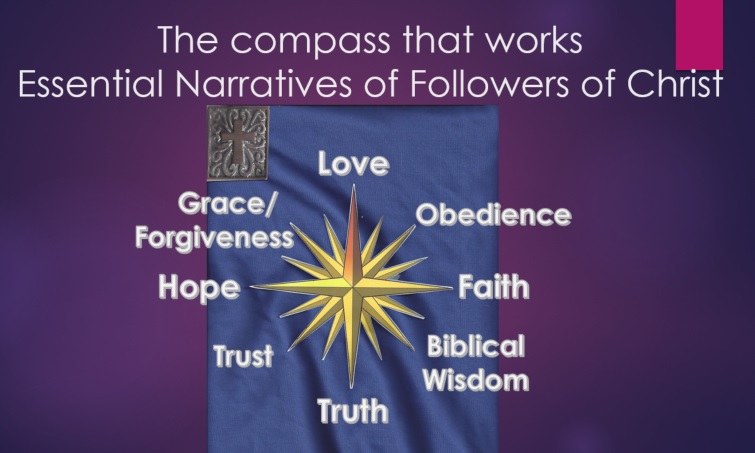
What is true? What does love require? Will I trust God? These are the questions which guide my life and shape the narrative.
Narrative identity theory postulates that individuals form an identity by integrating their life experiences into an internalized evolving story which gives you a sense of unity and purpose in life. In essence, it integrates your view of the past, present and future and acts to guide your thoughts, goals and direction in life.
In his book, We Will Not Be Silenced, Erwin W. Lutzer responds to the cultural assault on the church. This has resulted in many churches submitting to the culture in many areas, especially in regard to sexuality and even weakening our stance on the sanctity of life. The cultural narrative has had a devastating effect.
Re-shaping the narrative is worth the effort to win back the lost. The church must take the lead in clarifying who God says we are and what His Word teaches accurately. When we rewrite or soften the message to make it work along with what is going on in the current culture, we are doing great harm to the kingdom and damaging our ability to bring light into the darkness and help people understand what is at stake for eternity.
Jesus commanded us to be wise as serpents and innocent as doves—following this directive we can speak powerful truths to individuals. This requires educating ourselves from reliable sources, focusing on what is truly essential and then forming a narrative built on Biblical wisdom to guide our own lives and encourage others.
We all need a standard to follow, to act as a compass as we navigate through life. A compass is a great metaphor because of its consistency in guiding individuals who have learned how to use it to determine direction. But in the great divide in our nation, we need to realize we are not all using the same compass.
Radical Secularists are utilizing a compass that is focused on false principles if not outright lies. So we will compare two compasses as an exercise to lay out the major differences between Radical Secularists and Christians to hopefully draw us toward more effective strategies for the future.
The true compass, the Essential Narratives of Christ followers, primarily operates on the principle of LOVE. When life takes us to the deepest darkest places where confusion and discouragement can crush us, leaving us to question God and His goodness, love is the only answer. His answer to our confusion and discouragement is a cross.
To empower and guide our clients in crisis, we also have TRUTH as a primary point on the compass. Whatever negative, misleading or outright false thought seeks to dictate our decisions, we need to bring it into the light of truth.
Our compass leading us to Christ also offers HOPE and FAITH. You may have heard the statement, “You can choose to be a victim or a victor.” We all have witnessed people who have thrown off and rejected victimhood as an identity and chosen to allow hope and faith to find the way forward.
These are the four primary points of the compass. In between are additional points. Biblical wisdom, trust, grace and forgiveness, and, finally, obedience all play key roles in guiding us as well.
We need to be prepared both with the essentials to solidify our own narrative identity and to guide others. 1 Peter 3:15 admonishes us: “Always be prepared to give an answer to everyone who asks you to give the reason for the hope that you have. But do this with gentleness and respect.”
Kim Hayes is a writer for Pregnancy Help News. She has been a teacher, author, speaker and facilitator for marriage and family issues and married for over 35 years to Jeff, with four grown children. Kim's counseling experience included 21 years as a volunteer consultant and trainer at Pregnancy Decision Health Centers. She was the athletic director of Columbus Crusaders Youth Sports ministry for 15 years. Kim has written several books, including the latest release, Prodigal Rewind: The Grateful Son. She is presenting Essential Narratives as a part of the 2021 Heartbeat International Virtual Conference.
The Year of the Fifty
by Julie Stepp, Affiliation Coordinator
Heartbeat International
There’s something about 50-year anniversaries that always intrigues me. For one thing, I always seem to be ending up at these half-century landmarks whenever they happen. Whether it’s at my university, in my country of choice for an extensive study abroad, or during the timing of my first full-time job, I find myself celebrating 50 years of something… over and over. I’m starting to wonder, “Does God have something to tell me through all this? Are 50-year anniversaries significant to Him, and if they are, why?”
I started studying where the number 50 shows up in the Bible to search for clues. The first factoid I found was that “Pentecost” means “50” and was a feast that happened 50 days after the Passover celebration of freedom from Egypt. This feast of Pentecost was also called the Feast of Firstfruits and celebrated the harvest God had provided for the people. So evidently “50” was related to freedom, celebration, and abundance in that case. The number “50” also came up in situations involving armies (like a group of 50 soldiers) or measurements (such as “make this area of the temple 50 by 50”). But what really caught my attention was the significance of the Year of Jubilee, which happened every 50 years for the children of Israel and was an entire year of releasing slaves to their families, forgiving debts owed to debtors, and restoring land to its rightful owners. I felt I’d hit the proverbial jackpot. Here was an example in the Bible of a year-long celebration of a 50-year anniversary that God Himself ordained. Maybe here was the answer to my questions about “the year of the 50.”
Let’s take a look together at what God had to say to the children of Israel about this “jubilee year” in Leviticus 25.
First, God told them that every 50th year would be a year of rest – rest for the farmland and the vineyards. This directly followed another year of no crop-planting, as every seven years God commanded a Sabbath rest too. With the 50th year coming right after the 49th, the Israelites were eating what they had planted over 2 years ago. God promised to take care of them through this time and provide for all their needs through their previous harvest. When I read this, I immediately thought about how 2020 was a similar year of rest in many ways. Businesses were closed for several weeks, social events were cancelled or moved “to the comfort of your home.” We didn’t have the option to “plant” our normal seeds in the hearts of our donors and supporters. The pregnancy help movement largely had to depend upon past interactions and strong current supporters to get through this season, and God provided. (Interestingly enough, while we’re celebrating Heartbeat’s 50th birthday in 2021, the fiftieth year of Heartbeat International was 2020. Remember that a child’s first year occurs before their first birthday, and so on and so forth, so 2020 really did match up with our 50th year!)
Then God told His people to “proclaim liberty throughout the land to all its inhabitants” (v. 10). Slaves were freed and sent back to their hometowns, people who had sold their houses and land were welcome to return to their heritage (very important in those days), and many people got to experience freedom and release. It made me think of the fact that the pregnancy help community does exist to see an end to abortion in our lifetime, but in that existence, we encounter so much more than “the abortion problem.” We see broken families, wounded hearts, drug addiction, physical abuse, and sexual webs woven so tragically you wonder if their effects can ever be un-done. But Jesus came to give us “the year of the fifty.” He came to give not only us, but also our clients, a way out, a way to return to their homeland and repair the broken cities that have been devastated for generations. His power is real, and it works. What we do through pregnancy help inspires people to go back to their families – the places they learned their brokenness – and restore them back to healthy communities.
Last but not least, God promised the Israelites in verse 21, “I will command my blessing on you in the sixth year, so that it will produce a crop sufficient for three years,” speaking of His abundant provision to sustain His people through their 2-year season of rest. Because the provision of the 48th year was so great, God’s people survived and thrived until they could reap the harvest of the 51st year. We’re in that season of rest and provision, friends. The seeds you have sown in previous years are still alive in the hearts God destined for them to be placed in. And not only are those seeds planted in the hearts of your donors, but also in the hearts of your clients. You are a two-sided ministry. Don’t doubt that God will bring to fruition what He planted through you in what seems like the distant past. His seeds have a purpose, and He will accomplish what He has set out to do. Don’t worry about “letting the fields rest.” God saw ahead, and He has commanded His blessing on you.
Just a few more thoughts. As a twenty-something celebrating all these 50-year marks, I’ve realized that it’s so sacred to witness a 50th anniversary. Think about when a couple celebrates their 50th anniversary. It’s such a special celebration because they likely won’t get to celebrate another 50-year mark – their 100th anniversary. Many times, different generations are looking at the same fifty mark and only get to see that fifty mark once. In the same way, a 50th birthday for an organization is a moment that all share together. I get to celebrate what others gone before me have prayed for, wept over, and offered their lives in service to. Heartbeat International, and the pregnancy help movement in general, takes skills, viewpoints, and experience levels from various generations to bring true healing and help to our communities. We are a cross-generational movement, and our 50th birthday is a moment in time that captures our passion together. May this “year of the fifty” be a year of rest, release from bondage, abundant provision, and multi-generational celebration.
Belief Bias in the “Middle Minded”
by Angela Copenhaver Founder of WeTeachThink and HumanFromDayOne.com
When does life begin? Ask this question at a party and you will instantly cause a firestorm of dissenting views. If you ask a pro-life person that question, you will get a resounding “at conception.” If you ask a pro-choice person that same question, you will get an answer like “when the child is outside of the mother and can sustain life on its own.” If you ask a “Middle Minded” person “when does life begin?” you get a myriad of answers “12 weeks,” “20 weeks,” “when it has a heartbeat,” and/or “when it feels pain.” The answers are all over the board! How are we supposed to get people to protect human life when we cannot even collectively agree on when a human life is a human life?
How did we get to such opposing beliefs?
Throughout our lives, we develop certain biases of which we are likely not aware. These beliefs are called “belief bias.” This type of personal bias occurs when people see their beliefs as rational and the beliefs of others as irrational. In other words, when opposing sides of a topic perceive the other groups’ decision making as emotionally charged and irrational and their groups’ decision making as rational. When this occurs, it makes it nearly impossible to come to any type of agreement on an issue.
This is what has happened with the topic of abortion and when human life begins. The pro-choice side thinks that this is a “Woman’s Rights” issue and has no tolerance for what they believe to be the radical pro-lifers trying to shackle them with (emotional) religious morality. The pro-life side thinks that this is a “Human Rights” issue and has no tolerance for what they believe to be the “emotionally charged” radical left that is blinded by a selfish disregard for human life. The “Middle Minded” have declared themselves neutral, not wanting to be part of either group. However, just because the “Middle Minded” have excused themselves from the issue does not exclude them from having their own personal biases and unknowingly participating with their silence.
The “Middle Minded” individual is likely suffering from “confirmation bias.” This type of bias is the tendency for individuals to seek and find confirming evidence to support what they already believe. This fallacy is clearly illustrated by Trent Horn in his book Persuasive Pro-Life as to how the “Middle Minded” rationalize their position on abortion. They say things like “I don’t believe in abortion myself, but what about…?”
The thought process of “confirmation bias” is really attempting to find proof in reverse that allows an individual to ease their conscience. We start with what we believe to be true and then go in search of evidence to prove our beliefs by cherry-picking the facts that support our theory and leaving contradictory evidence behind or just ignoring it altogether.
When developing a strategy to debunk years and years of misinformation of when human life begins, it is critical to research the likely biases of the target market. You must clearly understand the descriptive thinking of your potential customer. It is vital to delve into their self-talk as to why and how they rationalize a topic. In this case, rationalizing the normalcy of abortion by confusing the understanding of when a human becomes a human.
Helping the “Middle Minded” to set aside their “confirmation bias” and begin to say “human life begins on Day 1” is the key to sustainable cultural change. We must reach out to this group and give them logical and emotional reasoning to actively support human dignity at all stages of life – Born and Preborn. We can do this by addressing their deep-seated personal bias and confusion on when human life begins with thought-provoking marketing.
All marketing is designed to gain agreement from your potential customer that your product is the best choice and for them to become loyal to that decision. When the “Middle Minded” become “Life Minded” and are loyal to that decision, the issue of abortion will become socially unacceptable. Until we gain agreement from the “Middle Minded” that we are Human from Day 1, abortion will continue to be socially acceptable in society.
Angela Copenhaver is the Founder and Executive Director of WeTeachThink an educational marketing organization designing multimedia campaigns to directly influence public education, awareness, and perception of Human dignity and rights. In 2018 Angela felt compelled to take on this mission after a friend asked her to read “40 Days for Life.” She had previously categorized herself as a “fence-sitter” and early in her life, she was very much a Pro-Choice advocate. She is presenting Essential Marketing Strategies: How to Change a Culture at the Heartbeat International 50th Annual Conference.
A New Sexual Revolution
by Lori Kuykendall, MPH, President and CEO of Medical Institute for Sexual Health
When the United States Supreme Court made the decision to legalize abortion in 1973, a cultural war had been raging in America for over a decade. Roe v. Wade was another battle won by the sexual revolutionaries who were advancing ironically under the banner of “Make love, not war!” Their war had as its objective to overturn the cultural values of sex within its God-intended context of marriage.
The so-called “science” of Alfred Kinsey from the 1940s and 50s espousing more sex, earlier sex and sex with multiple partners combined with the pharmaceutical advances of widely accessible birth control to the millions of “baby boomers” coming into their rebellious adolescent years created a perfect storm to set off dramatic cultural change. Sex without commitment or consequences became the norm, and immediately divorce rates climbed from 1 in 6 to now nearly 1 in 2 as did sexually transmitted diseases, then just two to be concerned about and now more than 30.
Consider the many “ills” of our society that have resulted from sex outside its intended context of healthy marriage. Add to climbing divorce rates and STDs abortion, sex trafficking, sexual abuse, cohabitation, pornography, rape, exploitation, out-of-wedlock births, prostitution, and adultery. We walk daily through the fallout in our own lives and in the lives of our friends and neighbors, and I wonder as we trudge through all the rubble if we can even imagine a different world.
Pregnancy help centers are positioned perfectly to compassionately help those left in the rubble. Other groups are fighting divorce or trafficking or pornography or rape in public policy, media, churches, and schools. Yet, somehow, we have not recovered a lot of the lost ground in spite of our individual efforts. We have not really gotten to the root of the problem.
Like the Hydra in Greek mythology, we have worked tirelessly to cut off a few heads—only to see more heads grow back in their place. Now, we must strike at the base—and we must do that together. We have the opportunity to join together and attack the Hydra at its core, by working together to restore sex to its intended context and start a “new sexual revolution.”
Ushering in this “new sexual revolution” will require the united strength of all of us—combining our knowledge and efforts and working in close coordination in a stronger, more strategic way. We must step out of our silos, link arms, and wave the victory flag of hope and wholeness as we rebuild the walls of our nation, one family at a time.
Lori Kuykendall, MPH is President and CEO of Medical Institute for Sexual Health. Her first job in health education was at the Women’s Pregnancy Center in Houston. She later was the director of LifeTalk Resource Center in Frisco, Texas. Together with Medical Institute Founder Dr. Joe McIlhaney, they are leading a national “coalition for a new sexual revolution.” She is presenting A New Sexual Revolution: Positioning for Cultural Change at the Heartbeat International 50th Annual Conference.
Reflecting on the 18 Years of Option Line
by Nafisa Kennedy, Director of Option Line
Earlier this month, Option Line celebrated their eighteenth birthday! It's exciting to think that some of the first callers to Option Line could be parents of children who may be graduating high school this year.
Just like over 18 years a child develops into a young adult, Option Line has changed a lot over the years in some amazing ways.
When I arrived at Option Line nearly fifteen years ago, we were a developing, yet still relatively small operation. We were answering calls and emails 24/7, but had just started taking on AIM Instant Messenger during 3 shifts per week. We had a paper schedule posted on the bulletin board each week. Nobody worked remotely-consultants would often come to work at 9pm in their pajamas so they could get in bed as soon as they returned home at 2:30 in the morning.