
by Bryan Gonzalez
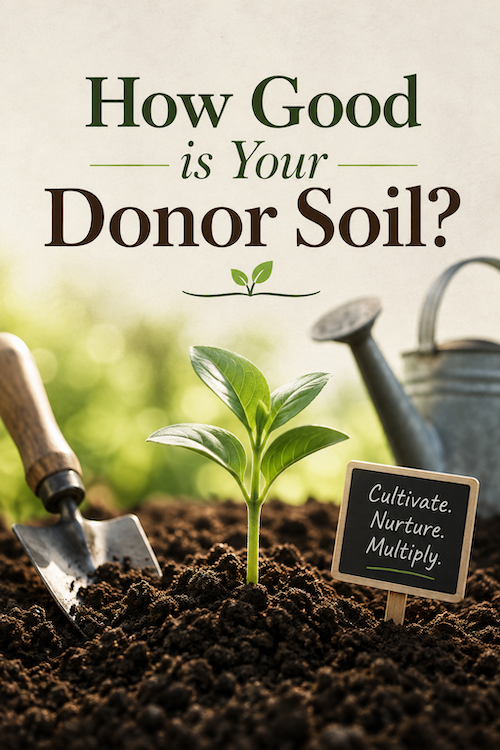 In Scripture, we read about the Parable of the Good Sower in Matthew 13. And in verse 18, Our Lord actually explains what He means in the Parable – one of the few times that He also interprets the Parable for us. This story of the Good Sower is also applicable to us as fundraisers, who are responsible for the quality of our donor soil.
As we approach the Fall Harvest season, my wife and I, being hobby gardeners, are starting to collect some of the fruits and vegetables that we planted, transplanted, watered, weeded, and protected from bugs over the past several months. As I was recently collecting the summer harvest, I reflected on the fact that the quality of the soil started months (even years!) before; and this quality is so crucial to the plant’s success.
1. Good Soil Is Rich in Nutrients – Donors Need to Be Nourished
Healthy soil contains the nutrients plants need to grow and produce fruit. In the same way, donor relationships need to be nourished. Donors need regular communication, meaningful updates, stories of impact, gratitude, and opportunities to see how their generosity is making a difference.
A gift should never feel like the end of the relationship. Like a garden, donor relationships require ongoing attention and nourishment. When donors understand the impact of their investment and feel genuinely appreciated, the relationship has an environment in which it can grow.
2. Good Soil Is Cultivated – Donor Relationships Require Care
Garden soil doesn’t become healthy by accident. It must be worked, prepared, watered, weeded, and protected. Likewise, strong donor relationships require intentional cultivation.
Fundraisers must take time to know their donors, understand what motivates them, communicate in ways that are meaningful to them, and build trust over time. We cannot simply plant a seed by asking for a gift and then walk away. Cultivation happens between the asks.
3. Good Soil Is Protected From Weeds and Pests – Donor Trust Must Be Protected
Good soil is often compromised by weeds, pests, and other threats. In donor relations, there are also things that can choke out generosity: poor communication, lack of follow-through, impersonal interactions, unclear financial stewardship, or making donors feel valued only when we need another gift. (This is one of the major causes of donor fatigue!)
Protecting donor relationships means being trustworthy, honoring commitments, communicating honestly, and promptly expressing gratitude. Our donors have entrusted us with something precious, and we have a responsibility to protect the relationship as carefully as we protect the soil in our gardens.
In Matthew 13, Jesus makes it clear that the condition of the soil matters. As fundraisers, we may not control the harvest, but we have a responsibility to cultivate the soil entrusted to us. We prepare the ground, plant faithfully, nurture relationships, remove obstacles, and trust God for the fruit. (Sounds a lot like the work we do for our clients/patients, doesn’t it?!)
And just as a gardener doesn't plant a seed today and expect a harvest tomorrow, effective fundraising is measured in relationships cultivated over months and years – not simply in the size or timing of the next gift.
Practical Tip: In the next month, let’s complete an assessment of our donor soil:
(1) Is your soil rich in nutrients?
(2) Have you cultivated your soil well?
(3) Has your soil been weeded and debugged?
**Do you have topics you’d like me to write on or have comments/feedback on my articles? Send me an email: This email address is being protected from spambots. You need JavaScript enabled to view it.**