Jennifer Wright
Sowing Life
by Jonathan Clemens, ThM, PA-C
We should all be familiar with the parable of the sower. It appears in all three synoptic Gospels in substantially the same form. Matthew 13, Mark 4, and Luke 8 all have the same soils in the same order. It’s often mistaught in churches, so much so that most people think it is a parable about how to be good soil. That is a culturally nonsensical interpretation: farmers didn’t change soil in the 1st century, they made do with what was there.
As modern Americans, we look on the parable of the sower through the lens of modern scientific agriculture that reshapes the earth to conform to our farming methods, and a lens of discipleship that makes spiritual growth substantially our personal responsibility. The sower does nothing modern: he simply scatters seed, without any attempt to control where it lands. Our modern efficiency cringes to think that seed actually landed on the packed earth of a walking path: after all, couldn’t the yield per seed be increased by focusing only on the good soil?
And that is Jesus’s actual point: rather than attempting to control the casting of the seed — the Word — we are to treat it as a limitless resource, spreading it far and wide, because the less-than-universal occasions when it sinks deeply into good soil are worth every single failed evangelism effort. Every single brief conversion and quick relapse, every single heart harder than the path, every single entangled “it’s complicated” life: all the failures are eclipsed by the joy of all-too-rare abundant success.
Let's relate this to abortion pill reversal. As a prescribing practitioner, I talk to or text with any number of women, dozens so far. The parallel to the soils is frustrating. Some do not have rides to a pharmacy. Others request a prescription and change their minds. Others have neither insurance coverage nor money to pay for the progesterone. One had a rare medical condition that might have been exacerbated by progesterone, and so she politely declined to proceed. If you’re keeping score, the 64 to 68% success rate seems great, but in reality, there are plenty of things that keep women from accessing abortion pill reversal even when they have taken the initiative to call the hotline.
In speaking with another Abortion Pill Rescue Network prescriber in my state, he lamented that so few women actually picked up the prescriptions he called in. He has a point: many women desire reversal but do not follow through. They have their own tragedies to deal with, and I wish each of them had the support and access and resources to never feel the need to abort their unborn child in the first place.
So we scatter seeds. Nurses answer the phone, knowing that many of the moms who call will not proceed with reversal. I talk to the moms sent to me, again knowing that many will not follow through. Even with timely progesterone, sometimes it doesn’t work. Had it been too long since the poisoning of the abortion pill? Was the baby too young? We hypothesize factors leading to successful reversal, but certainty eludes us.
Likewise, we don’t know the impact of the lives saved; by the time these children who lived have their impact on the world, many of us will have long since retired or died. What we do know is that every life is valuable because all are made in the image of God.
He who knit each of us together inside our mothers’ wombs is faithful and true. He does not tire, nor should we who offer life to the unborn and a second chance at choice to their mothers.
And so, we continue to scatter seeds praying that the next lands in good soil, giving us a chance to help a new life thrive.
Why Self-Care Matters for You
by Tracie Shellhouse, MCLC, LAS
Vice President of Ministry Services, Heartbeat International
Pregnancy help is a movement that needs to be particularly thoughtful about self-care. Not only do those we serve need to be supported in loving themselves, but also those serving. As we see again and again, the best way to teach is by example.
When we love ourselves and those we serve with well, we encourage clients to do the same. After all, Jesus said, “By this all people will know you are my disciples, if you have love for one another.” (John 13:35)
Mark 12:31 goes on to tell us to love others as we love ourselves. Servant leaders must take care of themselves to take care of others. So how exactly can we practice what we preach?
HALT
No, not just stop, but be aware of these four roadblocks to living life fully. Nothing is easy when you’re Hungry, Angry, Lonely, or Tired.
Here are ways to make sure you’re addressing these four key areas of concern.
Try not to let yourself stay...
Hungry – Eat well, take a lunch, and have ready-to-eat snacks on hand. It sounds easy, but it’s too easy to neglect these simple things, and when you’re hungry, you’re not prepared to serve well.
Angry – Take time for reflection. Determine why you’re angry, put it into perspective, and resolve or release that anger.
Lonely – Prayer partners or a personal prayer chain can be great for staving off loneliness. Take quiet time with God, keep an encouragement folder, and make sure to connect with family, friends, a mentor, or whoever makes you feel loved.
Tired – Do your best to keep good sleep hygiene. Nap, work offsite for a scenery change, and be sure to get some exercise in your day. Even taking an extra walk can help energize you during the day and help you sleep better at night.
Once you’ve addressed what made you HALT, look forward to the next moment and plan ways to rejuvenate and celebrate. Make sure you’re rejuvenating by taking planned breaks for quiet time, making your space restful, taking advantage of books, podcasts, or hobbies, and keeping yourself well. If you’re in a decision-making position at your organization, it’s worth considering making sure there’s a paid prayer day every so often, that you and your staff can arrive late or leave early on occasion as needed, that meals together are prioritized, and fun days and guest speakers are a part of the fabric of the organization.
To celebrate, reward yourself when you reach a goal with a craft, a new book, a class, whatever makes you joyful. For others, celebrate however you can with unexpected gifts, catching them doing great things and highlighting them at meetings, and just generally surprising your staff or peers by celebrating who they are.
In order to follow God’s command to love our neighbors as we love ourselves, we need to make sure we care for ourselves well. Otherwise, how can we possibly love others?
No Trust in Princes
by Jennifer Wright, Editor/Writer
Heartbeat International
Do not put your trust in princes,
in human beings, who cannot save.
When their spirit departs, they return to the ground;
on that very day their plans come to nothing.
Blessed are those whose help is the God of Jacob,
whose hope is in the Lord their God.
Psalm 146:3-5
Well, it’s time again. We have an election next week (in the USA) and anything could happen.
Well, maybe not anything. After all, some things seem pretty unlikely. For example, most predictions give a high chance of pro-life politicians controlling the House, though the Senate seems to still be an extremely close race.
Many of us may take this as good news, and I’m one of them, but then I look a little closer at the local races and get nervous again. There are ballot propositions in multiple states attempting to enshrine a right to abortion in state constitutions. There are city councils that have decided to fund abortion advocacy groups to “investigate” pregnancy help and de-prioritize enforcement of abortion-related laws. These kinds of things remind me that it’s really hard to know what the future holds when it comes to who is in power and what that will mean.
It's a good thing that’s not where my trust is – and yours shouldn’t be either.
Psalm 146:3 tells us, “Do not put your trust in princes, in human beings who cannot save,” and I am always struck by this reminder. Of course, the psalmist continues to remind us that those whose hope is in the Lord are the blessed ones – and that’s who I want to be.
I want to bear in mind that humans can’t save, but God can, that human plans often come to nothing, but God’s plans are always beyond ours. When your help is ultimately in God, whom should you fear? (I know, different Psalm, but stick with me.)
In the pregnancy help movement, I think these sentiments are especially true. While it’s important to have an idea of what kind of impact new or different human leadership will have, ultimately, we depend not on them, but on Christ.
That’s why, even in election season, I remind myself to trust not in princes, in humans who cannot save, but in God who can. It is the Lord who will save me, anyone I find myself serving, and, if He wills it, the princes too.
Meet an Abortion Pill Reversal Hotline Nurse
Amanda C., RN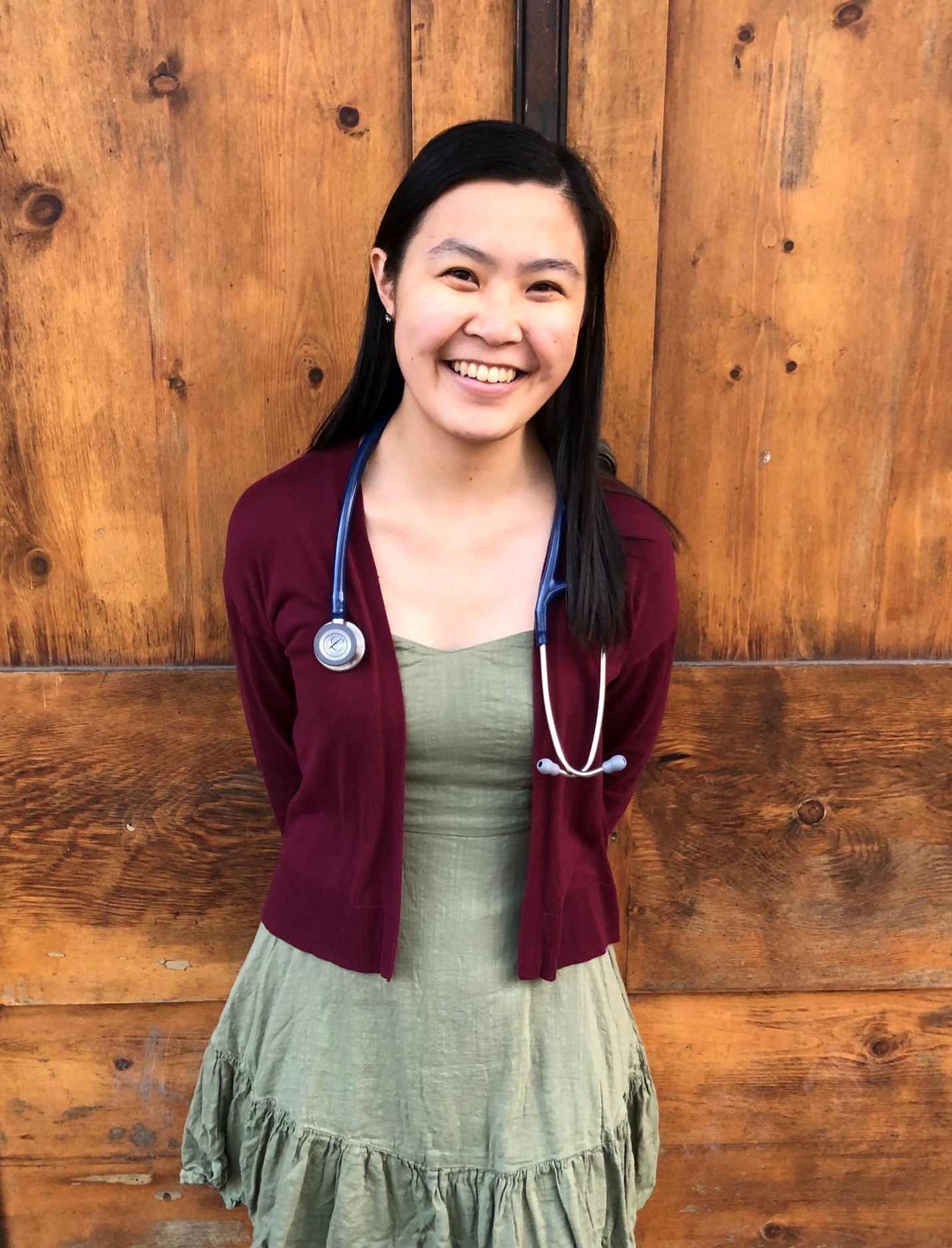
Where did you grow up and go to school?
I grew up in metro Detroit, Michigan, and went to nursing school at the University of Detroit Mercy. I recently graduated from nurse practitioner school at Spring Arbor University in Spring Arbor, Michigan.
Share with us about your family.
In addition to my parents, I am blessed with 3 siblings: a younger sister, younger brother, and older sister (4 siblings if you count my older sister’s husband!). I have extended family in metro Detroit as well as in Toronto, Macau, and Vancouver.
Tell us about what brought you to pregnancy help and the pro-life movement.
After watching the movie Unplanned in January 2020, I was amazed at how many tangible, practical ways there are to help and support women facing unexpected pregnancies. Since the movie portrayed 40 Days for Life and sidewalk advocacy as a positive and effective way to minister to abortion-minded women, after learning more about 40 Days for Life and Sidewalk Advocates for Life, I was inspired to go out and pray in front of a Planned Parenthood facility in my area. There, I got to meet a wonderful local community of faithful 40 Days for Life and Sidewalk Advocates for Life volunteers. Even though I have always been pro-life, praying outside of Planned Parenthood was the first time I actively got involved in the pro-life movement.
What brought you to Heartbeat International?
One day while praying on the sidewalk outside Planned Parenthood, I noticed one of our pro-life signs had a website on it. I went home that night and looked it up. I saw the many organizations that our community was partnered with, and near the bottom, I saw Abortion Pill Reversal. Since I had never heard of that before, I looked it up and found their website and started learning about the reversal process. I read some success stories and some of them mentioned talking to a hotline nurse about reversal. Something inside me sparked and I thought to myself, “I want to do that.” I found Heartbeat International’s contact information on the website and sent an email asking how I could get involved. When I heard that they were looking to grow their nurse hotline team, I jumped at the opportunity to join.
Tell us about your experiences helping women on the Rescue Helpline.
It’s exciting, challenging, and rewarding all at the same time. I truly appreciate the unique opportunity I have to help and serve the women who call our hotline seeking reversal treatment. Being able to be there for them in moments of desperation and provide them with real help and hope and a chance to save their babies has been one of the greatest honors I’ve had as a nurse. While not every case is a success story, the women who call us are so appreciative and grateful for the help that our nurse hotline team provides, and I’m so glad to be a part of it.
What has surprised you the most about the Rescue Helpline?
When I first started on the hotline, I didn’t expect a lot of the challenges that I eventually realized come with being a hotline nurse. Some of the women who call our hotline and are initially interested in reversal end up backing out after we get off the phone with them and choose to follow through with the abortion. At times some unfortunately miscarry before getting the chance to start the progesterone or shortly after they have started it. This is always heartbreaking. It was (and still is) a learning process of how to cope and manage my emotions effectively in response to the difficult situations that arise while working on the hotline.
What do you enjoy most about your work?
There are so many things I enjoy about being a hotline nurse. In addition to being able to love and care for women in such a tender and tumultuous time in their lives, one of my favorite things is hearing the success stories from the women I was able to help start reversal and seeing pictures of their babies that were saved through the reversal treatment. It’s always such a sweet reminder of how special our work is. Every successful reversal means another precious life is saved and another mother is beyond grateful for the opportunity to have her child in the world.
What are your favorite things to do outside of work?
I enjoy running, playing volleyball with friends, doing puzzles, knitting, and watching movies and TV shows with my family. I also like baking, traveling, and serving at church in the worship music ministry and as a youth leader for the high school students.
What else would you like to share?
Some encouragement from Scripture for all of us in the pregnancy help movement:
“And as for you, brothers and sisters, never tire of doing what is good.” -2 Thessalonians 3:13
Not the Enemy, but Captive to the Enemy
by Fr. Frank Pavone, National Director
Priests for Life
Respect Life Month has been observed every October since 1972. This year, we are in a unique moment. Roe has fallen and more than a dozen states have enacted laws that protect most babies from abortion.
And pro-lifers are under attack - by the federal government, by the media, even by our neighbors.
It is the eternal struggle between light and darkness, and we know the resolve we must have to fight against the darkness.
We see the attacks – physical, verbal, and legal – against pregnancy centers. The fact that the other side has focused its rage on the centers shows that these centers are indeed on the front lines of the battle. What matters most to the enemy is that the blood of the children in the womb is shed, and that the money from those abortions continues to flow.
Every time a pregnancy center saves a life, the goals of the enemy are thwarted, even if the laws are completely on their side.
Hence their rage.
We fight against this darkness not only by serving these Moms and Dads, but by letting their voices be heard. Share the stories of the saves far and wide. I recently attended a pregnancy center banquet here in Orlando and brought with me a Mom who had been served by the center 28 years ago. I had been praying outside the abortion mill; she was in the waiting room, and she came out and changed her mind. I baptized the baby six months later and she kept in touch ever since.
There, at the banquet, she was accompanied by her daughter who was saved that day, and by her daughter’s two daughters! (You can see a video of them starting here.)
This is how we fight back. We show the beauty of the light conquering the darkness.
That is also why the testimonies of those who have had abortions are so crucial to our movement. It was exactly 20 years ago that, at a Heartbeat International Conference, our Executive Director Janet Morana and I, along with Georgette Forney of Anglicans for Life, gathered representatives of various healing ministries and first presented the idea of the Silent No More Awareness Campaign (www.SilentNoMore.com), a mobilization that would give voice to those who lost children to abortion, tell the world of their pain, and proclaim the healing that is available in Jesus Christ.
This movement shows what love is. We don’t reject those who do evil. Nor do we deny that what they did was evil.
What we do is invite them to let goodness drive the evil out.
The people who have abortions, or who promote it, or who attack us and our centers are not the enemy. They are captive to the enemy, the ancient enemy of humanity, who wants to kill God, but knowing he cannot do so, kills what is made in the image and likeness of God – human lives.
By our love for all those lives, we set them free!
Forget Me Not
Honoring Pregnancy and Infant Loss Awareness Month
by Sara West, MSHS-PH, Director of Clinics
Institute of Reproductive Grief Care
October is officially upon us! Although this month coincides with cooler weather, pumpkins, and harvest festivals galore, it also is a month of special awareness. It is Pregnancy and Infant Loss Awareness Month.
The Institute of Reproductive Grief Care helps families and loved ones honor and remember those impacted by reproductive loss.
With 1 in 4 pregnancies ending in miscarriage, these - and other types of pregnancy and reproductive losses - have a profound effect on millions. Everyone knows someone who has experienced this unique, and often very painful, loss. Yet the grief and emotions of pregnancy loss are typically underestimated and marginalized in our culture.
Emotional reactions after pregnancy loss are as unique as fingerprints. However, those who grieve can feel this pain for years - even decades, according to our study. In addition to this pain, there is the worry that others have completely forgotten about the loss, forgot that the pregnancy even happened, or simply don't think that this kind of grief is as important as "traditional" grief.
Reproductive loss surrounds us, and yet we do not talk about it. And, if we do talk about it, we tend to focus on the mother, ignoring partners, family members, and other loved ones, even though we know it impacts the whole family.
One person wrote on our healing website, MiscarriageHurts.com, “My sister has had three miscarriages. Each time she feels worse. Each time I feel worse.”
These losses are outside of the normal rules of grief in society. We do not know what to do or say, therefore, very often, we do or say nothing. It is hard to know exactly what to say, but simple phrases like: “I am so sorry – that must be hard. You are not alone, and I am here if you want to talk. How can I support you?” are helpful in that you have acknowledged that person, their loss and their grief. Just this acknowledgment can be an invitation to healing.
The Institute of Reproductive Grief Care brings to light the widespread need for help that is faced by the millions impacted by miscarriage and other pregnancy and reproductive losses. We change the way that people think and talk about reproductive loss, and create traditions that focus on healing, remembrance, and hope. We offer a safe place for all impacted by pregnancy and reproductive losses, to receive the support that they need in kindness and without judgment.
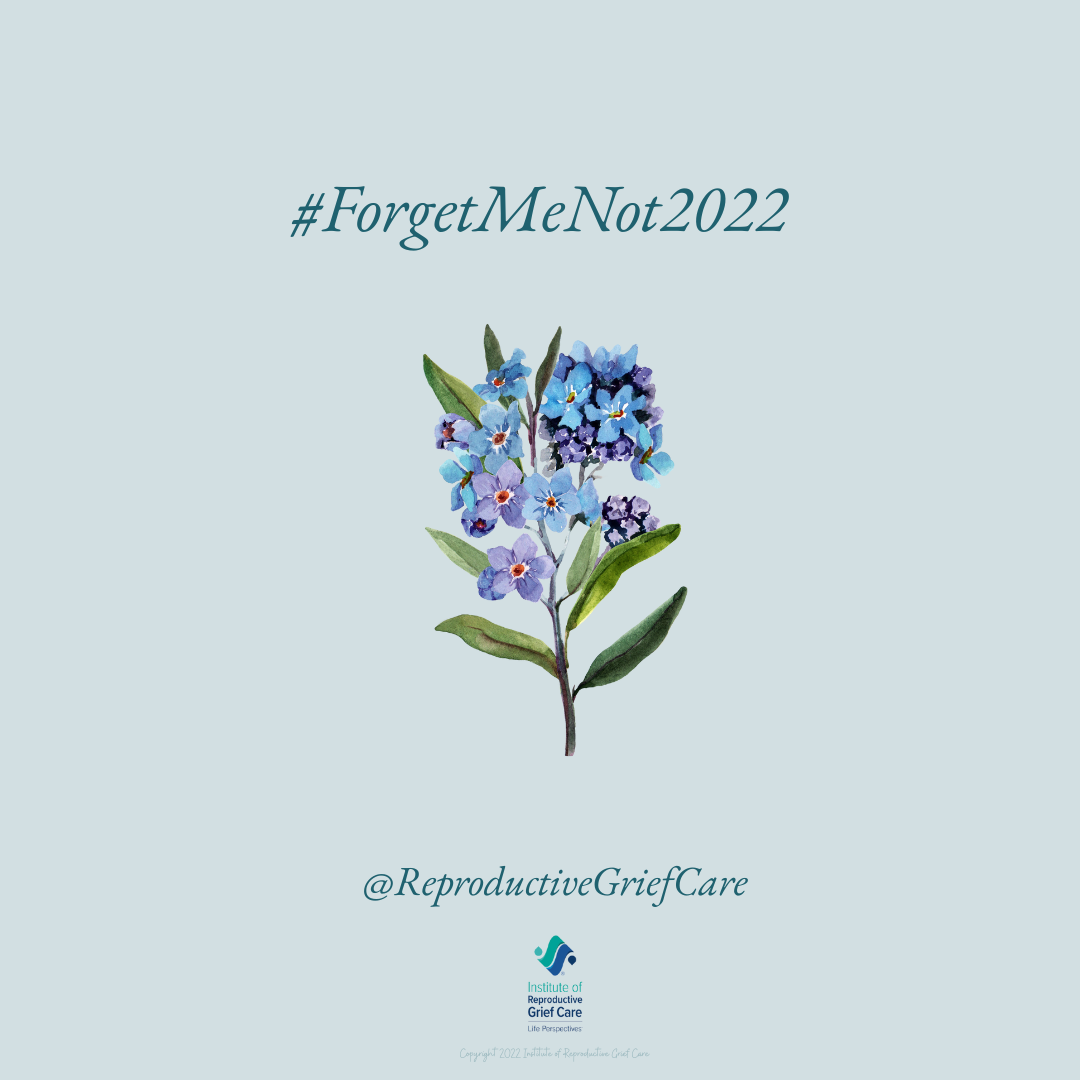 As experts on grief after pregnancy loss, we are leading the charge to “Wear and Share” the “Forget Me Not” flower in October. The “Forget Me Not” flower honors those impacted by pregnancy and reproductive loss, raises awareness for the millions of people impacted, and gives those grieving a way to tell their story and process their loss. The "Forget Me Not" flower assures those impacted that we are remembering them, and remembering their children with them.
We at the Institute encourage everyone to wear a "Forget Me Not" flower in October to show your support, care and compassion for anyone impacted by pregnancy and reproductive loss.
Are you, or do you know, someone impacted by pregnancy and reproductive loss? Not sure what to say or do? The Institute of Reproductive Grief Care and Life Perspectives’ Helpful Toolkits are free resources for anyone who needs help, hope and healing after this unique kind of loss. These toolkits, on our website at https://www.LifePerspectives.com, include resources, videos and helpful lists. Special “Helpful Toolkits” are also included for: women, men, family and friends, as well as for healthcare professionals and faith leaders.
Please join us in honoring Pregnancy and Infant Loss Awareness Month – we remember with you.
Courage at the 2022 European Pregnancy Help Leaders Summit
by Andrea Trudden, Vice President of Communications & Marketing
Heartbeat International
Walking through busy streets. Sleeping at a hotel with music playing in the hall. The 2022 European Pregnancy Help Leaders Summit was a very different environment from the sirens and chaos the Save a Life pregnancy help team left in Ukraine.
Alina was 39 weeks pregnant when the war started. Now, her very life was at risk and the reality that her husband could be sent to fight in the war increased the stress.
A pregnancy center director of the Zaporizhzhia Save a Life location, she knows the pressures when faced with an unexpected pregnancy. Add a war to the typical pressures a woman has in that delicate moment of her life, and Alina knew that pregnancy centers in Ukraine would be needed during wartime. And so, her work continued after being displaced from her home in Zaporizhzhia.
In the midst of the war sirens and vibrations from the blasts, Alina gave birth to her son, Mark, in a make-shift bomb shelter. It was humbling, and a great reminder of the beauty of life. This little baby boy brought a light of joy in a moment of darkness.
With her new baby, her two-year-old daughter, and husband, Alina moved West toward safety. Here, she sought out a pregnancy center to continue serving women who sought pregnancy help. Her newborn baby by her side, Alina started meeting with women — some local, some displaced from the southeastern and eastern parts of the country — to provide compassionate care and a listening ear as they discussed their futures.
She humbly told us, “Please don’t think I’m a hero. I’m not a hero. And I’m not brave because I wanted to leave. I wanted to run for the sake of my children, but I would rather die than to disobey what God has called me to, which is to stay.”
Similarly, Alla, the national director, manages seven pregnancy centers throughout Ukraine. A widow with a sixteen year old and an eleven year old at home, Alla channels her hope and energy into the centers. Under her leadership, Save a Life centers have expanded across the nation.
She acknowledges that the loss of her husband to cancer when her children were young helped motivate her to get involved with pregnancy centers to be a pillar of support for women. Today, her children help by volunteering their time at the pregnancy centers as well, bringing them together in the work to save lives.
Nadia travels between Ukraine and the United States to help raise awareness for Save a Life. In August, they hosted their annual conference in spite of the war. With more than 100 in attendance, this was an encouragement that God is at work in Ukraine through pregnancy help.
Understanding the risk of travel at this time in Ukraine, these three women joined 17 other countries at Heartbeat International’s European Pregnancy Help Summit in Bucharest, Romania. At the summit, they were able to share their experience both in living in a war zone and in serving in a war zone. As many of the European nations are serving Ukrainian refugee women, the insight Nadia, Alla, and Alina provided was timely and meaningful.
This team of women was an example of courage and strength, once again showing the world that women are capable of being mothers and accomplishing the work they are called to.
What a Letter from Seven U.S. Senators Means for Heartbeat
by Jennifer Wright, Editor/Writer
On Monday evening, September 19, we received a letter from Senator Warren (and six others) fraught with bizarre accusations and demanding answers to a number of questions by October 3. Here’s the thing though, this letter is nothing more than a political stunt. While it makes demands, it invokes no authority. It throws wild accusations, but never points to an actual situation that has actually happened, and only postulates hypothetical future situations. And of course, TIME Magazine was aware of this letter at almost the same moment we were and reached out to us for comment.
And yet, we’re going to respond. We’ve already released a statement, as you may have seen at Fox News, Catholic News Agency, Life News, or in our own email announcement earlier this week.
Why? Because this is what we do – and this is an opportunity.
We know that your work is on the frontline. You’re serving clients, changing hearts, saving lives, and transforming communities. If something like this came directly to your office, the best move might not be to take time away from that front-line service. But we have those resources, and we’re here to represent you, our affiliates, so you don’t have to take time away from your mission.
And honestly, this is an opportunity for the pregnancy help movement. We can speak to the reality and share your good work because of this letter.
We don’t have anything to hide, and this gives us the opportunity to tout the great work of our Next Level CMS team and the high security standards we’ve set for any data we maintain in order to serve women. In fact, Next Level maintains the same security standards (and the same software platforms) of any hospital records system. Our Sample Policies & Procedures and Sample Medical Policies & Procedures manuals include policies surrounding document retention and security standards for client records. These policies have been reviewed by legal counsel inside and outside of Heartbeat, and we stand by them.
Neither Heartbeat, Option Line, nor Next Level have ever had a security breach related to client information (or of any kind). Any data we collect has always been secure, safe, and legal.
So look out for our final response to this letter. We’ve been sharing with reporters and media contacts for months about your support and care for women in unexpected pregnancies. We’ve been making sure we address data privacy concerns, counter accusations with truth, and provide statistics on the impact of the pregnancy help movement. This letter shines light on these statements more than any of our previous interviews have allowed for.
Thank you, Senators, for this PR opportunity.
Additional Resources
