by Andrea Trudden, Vice President, Communications and Marketing
Pregnancy help organizations should be aware of a concerning form of document fraud involving pregnancy verification letters.
Pregnancy verification letters and editable templates are being offered for sale or placed behind paid access on online document-sharing platforms. Individuals may download these documents, alter the personal information, and use them to apply for public assistance or other social benefits.
A falsified letter may include the name, logo, address, provider information, or letterhead of a legitimate pregnancy help organization, even though the organization never served the individual or issued the verification.
While pregnancy centers cannot prevent every misuse of their name or documents, they can take practical steps to identify fraudulent materials, seek their removal, and strengthen their documentation practices.
Search for Your Organization Online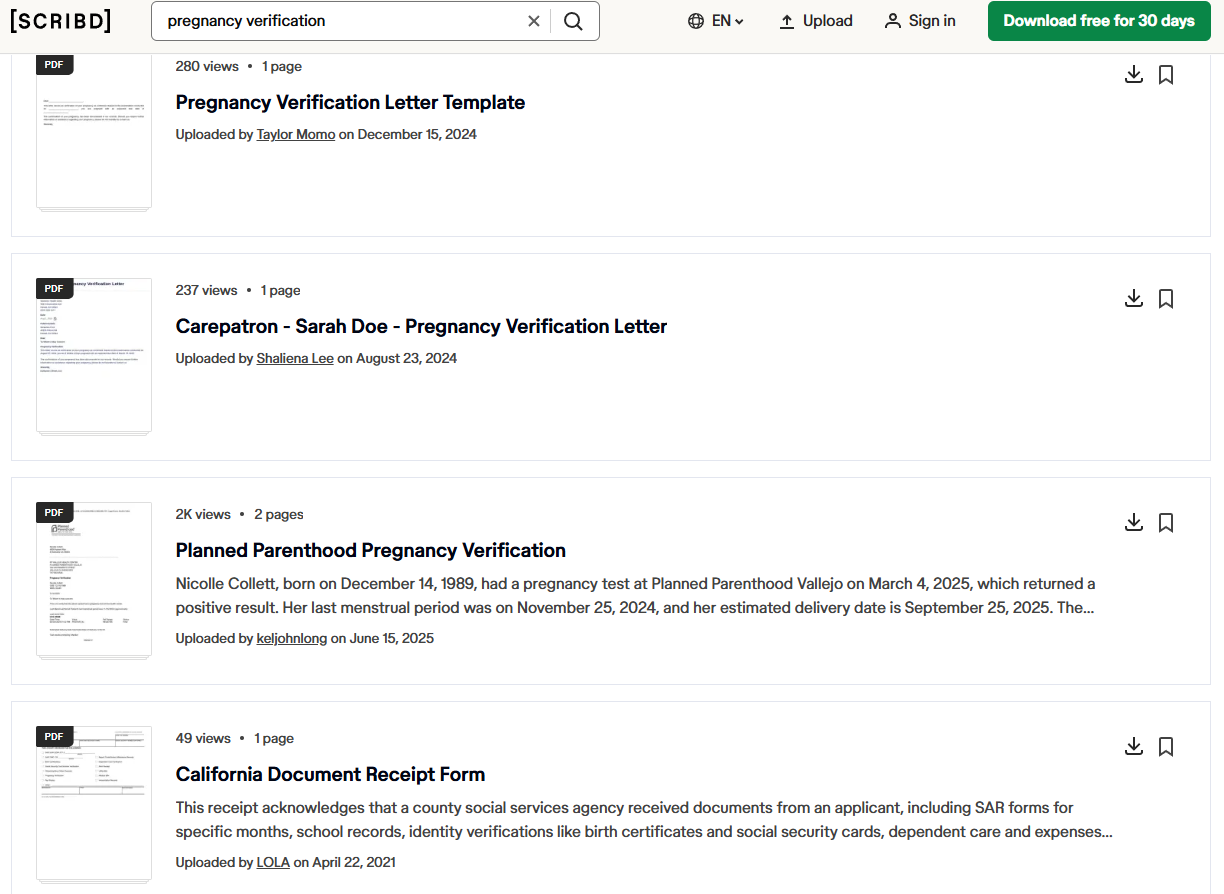

Pregnancy help organizations should periodically search Scribd and other document-sharing or digital-publishing websites for materials bearing their name.
Sites to consider checking include:
- Scribd
- SlideShare
- Yumpu
- Studocu
- Etsy and other online marketplaces selling document templates
Some pregnancy verification letters may be advertised for sale, while others may be available only after
purchasing access or subscribing to the platform. The presence of a document on one of these sites does not necessarily mean the platform created or knowingly approved it. Many of these services host content uploaded by individual users.
Search for:
- Your organization’s full name and common abbreviations
- Previous names used by your organization
- “Pregnancy verification” followed by your organization’s name
- “Proof of pregnancy” followed by your organization’s name
- Your organization’s name with terms such as “letter,” “form,” “template,” “PDF,” “download,” or “for sale”
- The names of medical personnel or staff members authorized to sign verification letters
- Previous addresses or outdated contact information that appeared on older letterhead
Search results may identify documents that are difficult to locate through a platform’s internal search function.
What to Do If You Find a Fraudulent Document
If you discover a pregnancy verification letter or other document that appears to use your organization’s name, logo, letterhead, or staff information without permission, take the following steps: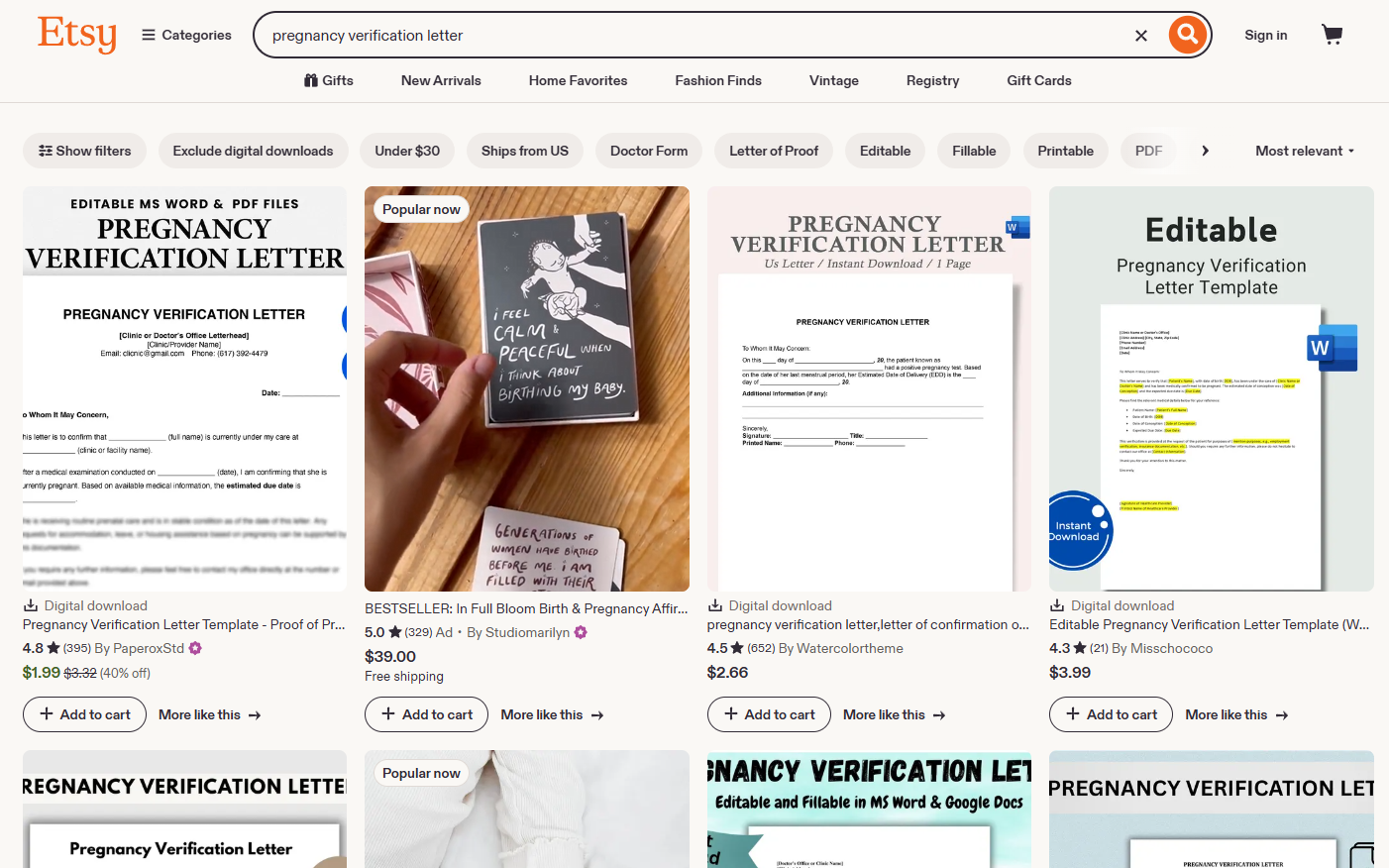

1. Preserve the evidence
Before requesting removal, document what you found. Save:
- The direct URL for each document
- Screenshots of the listing, preview, uploader information, and document
- The date the document was discovered
- The listed price or subscription requirement
- Any visible title, description, upload date, or account name
- A copy of the document, if it can be obtained lawfully and without providing unnecessary payment or personal information
Do not share the fraudulent document publicly, particularly if it contains personal or medical information.
2. Confirm that the document is unauthorized
Compare the document with your organization’s records and approved templates. Determine whether it was issued by your organization, altered from an authentic letter, or created without authorization.
Limit access to client records to authorized personnel and follow all applicable privacy and confidentiality requirements during the review.
3. Contact the platform and request immediate removal
If the document appears on Scribd or SlideShare, submit a report through Scribd’s copyright infringement and abuse reporting page.
Include a direct link to every unauthorized document. Scribd states that it cannot process reports based only on search results, keywords, document titles, or general listings.
The report should clearly explain:
- That your organization owns or controls the letterhead, logo, form, or other protected material
- That the document was uploaded and distributed without authorization
- That the document is being sold, offered through paid access, or otherwise distributed
- That it may be used to impersonate your organization or misrepresent services provided
- That you are requesting the document’s immediate removal
- The direct URL of each document at issue
For documents found elsewhere, use the platform’s reporting, intellectual-property, impersonation, fraud, or abuse process. Preserve all evidence before submitting the report.
4. Notify the appropriate internal leaders
Immediately notify your executive leadership and, as appropriate:
- Legal counsel
- Your board chair
- Your insurance carrier
- Your compliance or privacy officer
- The staff member whose name or signature was used
- Your communications or technology team
Legal counsel can help determine whether the incident should also be reported to law enforcement, a government benefits agency, or another authority. Do not contact an individual suspected of using the document without first considering legal, privacy, safety, and evidentiary concerns.
Protect Client Confidentiality During an Investigation

If an investigator, government agency, law enforcement officer, or benefits administrator contacts your organization, do not provide personal details about any client or confirm that an individual is or is not a client.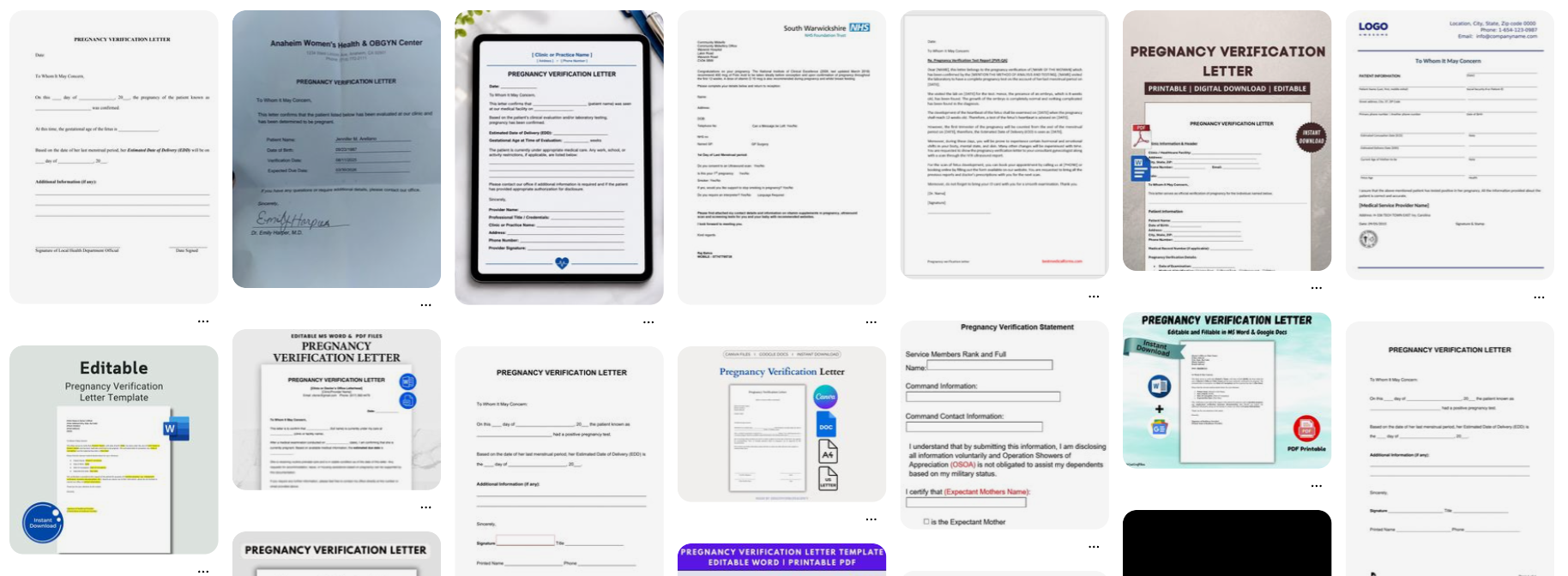
Instead, ask the investigator to send your organization a copy of the document under investigation. Your organization can then review the document and confirm whether it appears to be an authentic document issued by the organization.
Designate a specific staff member to receive and respond to these requests. Consult legal counsel before releasing records or information beyond confirming the authenticity of the document.
Review Your Procedures
Pregnancy verification letters can provide important documentation for women seeking assistance. Unfortunately, even a legitimate document can be copied, altered, sold, and misused once it leaves an organization’s control.
Pregnancy help organizations are encouraged to search for their names online, update their letterhead, remove unauthorized materials when possible, and review their document-security procedures before an incident occurs.
If your organization discovers a fraudulent letter, preserve the evidence, report the specific document to the platform, notify the appropriate organizational leaders, and consult qualified legal counsel regarding any additional response. Above all, protect client confidentiality by requesting a copy of the questioned document rather than sharing personal information about current or former clients.
We cannot prevent every instance of fraud or control how others may misuse our documents. What we can do is strengthen our internal practices and continue serving every client with integrity, compassion, and respect. In an unfortunate way, this misuse also demonstrates that pregnancy verification provided by our organizations carries credibility. Social service agencies recognize the quality and value of the services pregnancy help organizations provide. While some may attempt to exploit that trust for dishonest purposes, we must remain committed to protecting the integrity of our work without allowing their actions to diminish the care we offer women in need.