by Michele Cheresnick, LAS, Affiliation Coordinator
There are some losses we carry quietly.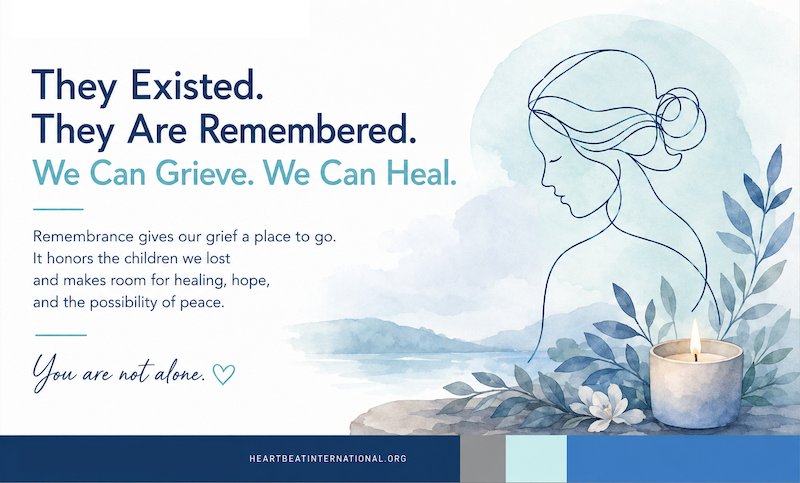
Some are losses we don't know how to name. Some are losses we have been told we shouldn't grieve. And some are losses we have tried so hard to put behind us that we hardly know what to do when the memories return.
For me, abortion is one of those places.
I have had two abortions.
I have also walked through my own healing journey, participated in two memorials for my babies, and had the privilege of walking alongside many women as they have journeyed toward healing after abortion.
Until I walked through my own healing, I don't think I could have understood the deeply personal meaning, and the fullness of healing, that happens when a woman is given the opportunity to honor, recognize, grieve, and say goodbye to her aborted baby.
I thought healing meant just moving on—but what it really meant was first being willing to look back.
For some of us, the grief is not only for the baby we lost. The unrealized dreams. The birthdays that never came. The child we sometimes wonder might have looked like us. The family we imagined, even if only for a moment. We grieve the person we might have become as a mother, along with the hopes and possibilities that disappeared with that decision.
And sometimes, we grieve all of it at once.
We often make assumptions about what abortion means for a woman afterward. We may assume that if she chose abortion, she must not have wanted the child. If she appears to have moved on, we may believe she has no sorrow. If she never speaks about it, we may think there is nothing to say.
But silence is not the same thing as peace.
Women who have experienced abortion can grieve deeply. So can fathers, grandparents, siblings, and other family members. A person can believe she made the right decision at the time and still experience profound sadness afterward. She can feel relief and grief, regret and gratitude, sometimes all at once.
I know this because I have lived it.
For most women, there was never a funeral. No grave. No opportunity to say goodbye. Perhaps no one even knew they were pregnant. And because the circumstances surrounding the loss are so complicated, we may not know where our grief belongs—or whether we are even allowed to call it grief.
That is the beauty of a memorial.
When I stood at memorials for my own babies, something happened that I had not known I needed. I was given permission to recognize them. To acknowledge that they had existed. To grieve what was lost. To say goodbye.
There was something sacred about having a place to bring the grief I had carried for so long.
Since then, I have witnessed something similar in the women I have walked alongside. Sometimes the grief comes quickly. Sometimes it takes years to surface. And sometimes a woman simply needs someone to sit with her in the place she has been afraid to go.
September 12, 2026, is the National Day of Remembrance for Aborted Children. Across the country, and in communities beyond the United States, people will gather at gravesites and memorials to pause, pray, and remember children who have been lost to abortion.
For some, it will be a public gathering. For others, it may be a quiet and deeply personal moment—a visit to a memorial, the placing of flowers, a prayer, or simply the acknowledgment of a child whose life has been difficult to talk about.
The National Day of Remembrance for Aborted Children was launched in 2013. The first observance took place that September, with more than 100 memorial services held across the country, including services at 38 gravesites of aborted children.
And yet, even with these beautiful memorials and this day set aside for remembrance, many women still feel stigmatized and unable to grieve.
The grief surrounding abortion can be complicated by shame, fear, secrecy, or simply not knowing where to put the feelings that remain.
I don't believe a woman has to have everything figured out before she can grieve.
For me, remembrance has not meant remaining trapped in the past. My memorials did not erase my sorrow, they transformed it. They gave my grief a place to go.
Even though I can't change my story, I still have moments when I wonder about the children I never got to know and the lives that might have been.
But I don't carry those questions in quite the same way anymore.
My babies are part of my story. The grief is part of my story. And so is the healing.
Being able to remember them, honor them, and say goodbye didn't magically erase the sadness. It gave me a way to carry it. I didn't have to choose between moving forward and remembering where I had been.
I could do both.
If you are carrying your own story of abortion, perhaps you know some of this quiet grief yourself. Maybe you are just beginning to recognize it. Maybe you have carried it for years.
Wherever you are on that journey, I pray you find the freedom and gentleness to take the next step that is right for you—and that, along the way, you find moments where remembering brings not only grief, but also peace.
If you are remembering your baby and your own story of loss this year, please know you don't have to carry it alone. If you would like us to pray for you, we would be honored to do so. You can reach out to us confidentially here: https://www.heartbeatservices.org/affiliates/prayer-forum
If you feel drawn to find a place to remember and honor your baby, you can find memorials and gravesites near you through the National Day of Remembrance.
Find a memorial or gravesite near you:
https://nationaldayofremembrance.org/
2026 scheduled memorial services:
https://nationaldayofremembrance.org/scheduled-services